

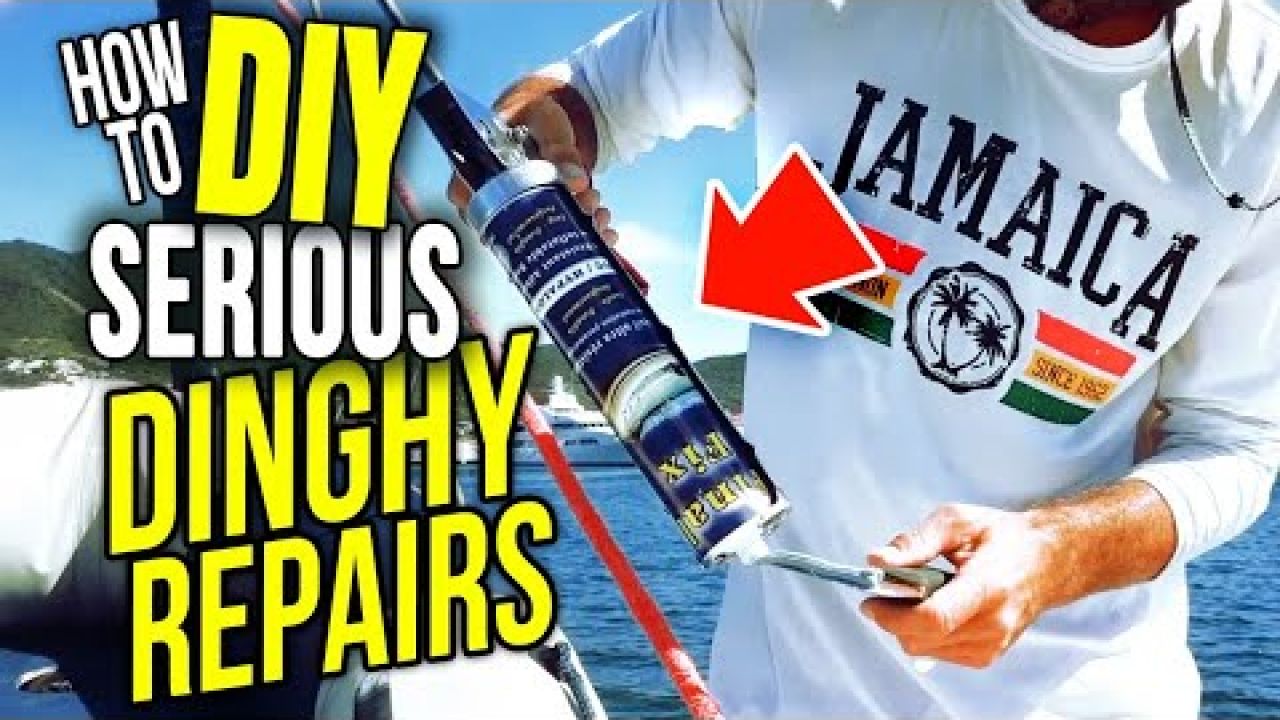
In this video, How to DIY Serious Dinghy Repairs while Cruising Full Time, we get down to business and do a serious re-glueing of our dinghy transom by using the notorious Final Fix, and re-inforce it with hypalon patches and PVC tubing. We also replace a spun prop on our Tohatsu and share maintenance tips.
#dinghyrepair #sailboatdiy #finalfix #sailingchannel
Closed Captions (CC):
in this video i share with you the
repairs we've made to our dinghy
while trying to keep it in service as we
cruise full time here in the caribbean
last time on sailing bellachandra i made
a video all about seasickness
the causes treatments that are available
and prevention
i'm dan and my partner is noelle and
we're sailing bellachandra
we sailed all the way from nova scotia
canada to the caribbean and we're
cruising all around the caribbean now
making youtube videos
and if you haven't subscribed to our
channel just go below this video look
for the big red subscribe button and
press that button
for those of you who have been watching
our channel as we cruise through the
caribbean you'd know that we've had a
lot of trouble with our dinghy
just keeping it on the water we have a
dinghy from the company called bombard
that comes as a kit you can assemble the
dinghy and disassemble the dinghy for
travel
and it's very convenient in some ways
but in other ways we found it difficult
to make it last
especially if you're living aboard full
time and cruising like we are
we use our dinghy virtually every day we
use the dinghy to get our groceries to
buy our fuel to get our water we walk
the dog
just for a walk on the beach to visit
other boats i mean it's the family car
our dinghy is constantly being used and
sometimes abused and it's important to
have a dinghy that can hold up the
exposure of the elements and the
constant use
the ideal dinghy for cruising in the
caribbean would be made of hypalon and
have a rigid bottom
or a rib that would be with a fiberglass
or aluminum bottom
and kind of a v-shaped bow and a very
strong construction
our dinghy is pvc it does have a hard
wooden bottom that's wood panels that
are connected together
but the bottom is inflatable and a lot
of people do have dinghies like this
that are assembly dinghies and they do
cruise the caribbean with them
but like us they have to do a lot of
repair
in this video i'd like to talk about our
experience with our dinghy and what
we've done
to keep it floating and keep it moving
as we cruise through the caribbean
and what products you should buy to keep
your dinghy well in service while you
cruise without having to purchase a more
reliable yet very expensive
hypalon rib dinghy hope you enjoy it
if you go back to watch some of our
previous episodes
you'll see that we've tried multiple
repairs and temporary fixes to keep our
dinghy transom connected
using expensive pvc glue with only
temporary success
and our transom has mostly been held
together with ropes and bungees for
months while we've struggled with our
dinghy slowly failing
we've had to glue this joint here
several times on both sides
and continuously the force of the engine
and just the age of the glue is not
holding up and the transom
really just becomes loose at those spots
and literally separates so i've done
kind of a quick jimmy rig with this
by adding some bungees here that holds
down
this flap and that seems to do the trick
to hold the transom in place at least
you know
as long as the bungees hold up in the
saltwater environment and i've got them
wrapped around the handle over here on
both sides basically the same in this
video i will be gluing the transom
using final fix a canadian product which
comes in a caulking gun cartridge
final fix was recommended to me as the
best dinghy repair product on the market
this product was recommended to me by
several other cruisers who use it and
swear by it i had seen repairs done with
final fix
and was impressed and it's slightly
cheaper than other repair kits so we
thought we would give it a try
before gluing the transom i removed and
scraped away
all of the old pvc glue and cleaned the
connection points with acetone
then deflated the pontoon before gluing
i made sure to have ropes and bungees
ready
to hold the transom and pontoon together
after gluing
most dingy patches would be applied with
a deflated dinghy but where we have a
point of curvature where our transom
connects
we have no choice but to connect our
transom with a fully inflated dinghy
i made sure to have ropes and bungees at
the ready to hold the transom and
pontoon together
after the glue is applied
[Music]
i used a metal paint scraper to apply
the final fix
glue generously to the gluing surface to
1 16 inches
or 2 millimeters thickness
[Music]
you can also use a plastic scraper or
spatula to do this
final fix sells a complete repair kit
which comes with one
[Music]
once all the glue was applied i inflated
the pontoon
to take its proper shape against the
transom
[Music]
using ropes and bungees i secured the
transom to the pontoon
and press down on all of the glued
surfaces to ensure
a tight connection it's important to try
to remove
any air bubbles
hey
[Music]
hey
[Music]
all right so let's go take a look at the
dinghy
after gluing i waited 48 hours for the
transom to dry
then i cut two large patches of hypalon
and glued them over the connection
points for added strength
then waited an additional 48 hours
before putting the dinghy back in the
water
now with the transom glued we are very
happy with this repair
it seems to be very solid and i'm quite
convinced that final fix
is bar none the best dinghy gluing
product on the market
if you look closely i've also created
two additional transom supports
using pvc pipe on an angle to counter
the force of the 5 horsepower outboard
motor an idea that i borrowed
from most of the rigid bottom dinghy
transom designs our dinghy being the
fold up type
could not have been built with supports
like this and also be able to fold up
for storage
also if you look here where the paddles
are attached this attachment point has
undergone
a lot of wear and tear and we don't
really paddle all that much
it didn't last very long it's just the
salt water kind of ate it away
the original attachment point here is
gone i've created some temporary fixes
here using some pvc
pipe and some stainless steel wire it's
enough that it'll work to get you out of
a
tight spot if your engine dies but it
may only work once or twice and then
i've got to repair it it's really just
maybe bad design or bad materials in the
original construction of the dinghy
also if you've been watching our videos
right through since the bahamas you'll
see that we've had two different
outboard motors before leaving nova
scotia
we purchased a tehatsu 3.5 horsepower
four-stroke
outboard motor unfortunately that
outboard motor only lasted until about
the dominican republic
and that's when it started to die it was
a slow death and we did end up replacing
our outboard with an older
used two-stroke tahatsu five horsepower
motor
which turned out to be a much better
motor just as important as having a
reliable dinghy
you will need a reliable outboard motor
if you plan to cruise full-time
also i cannot stress more the importance
of bringing spare parts for your
outboard motor along with you
recently our propeller bushing failed
this is also known
as a spun prop when you remove your prop
to inspect it you'll see a soft
plastic or rubber bushing layer between
the prop itself
and the teeth which hold the prop to the
prop shaft if this layer
appears damaged or chewed up you may be
in need of a new prop bushing
props like this are built this way as a
fail-safe in case the prop were to run
aground
this bushing would fail before something
more serious like chewing teeth or
stripping gears
or even breaking the shaft which spins
the prop we found someone who changes
prop bushings but unfortunately he
didn't have our bushing in stock but we
did find a replacement prop for our
tehatsu at budget marine
it's also a good idea to carry a spare
impeller or seals for your gearbox
in case you ever have to replace either
i recently replaced the seals
in the gearbox of our new tohatso
two-stroke motor as when
i changed the gearbox oil only water
came out
that was an indication that the seals
needed to be changed
fortunately my zinc was in good
condition and there was no corrosion
tahatsu is a good brand to carry here in
the caribbean
as there are more than one island that
carries parts for tohatsu
however they may not have the parts you
need so it's a good idea to bring spares
for your motor before leaving home
thanks for watching if you like this
video please don't forget to subscribe
and if you want leave a like or comment
below
and if you haven't checked out our
patreon page it's always a good time to
do so
patreon is a place where you can give
back if you like what we do and you want
to support us
thanks see you later
yeah you're not allowed in there bubble
come here come see dad
come here
hey
Uploaded by:
Cormier Daniel
•
Category:
Sailing Educational (Sailing Courses)
•
Added on
13 February 2021
•
Location:
Cole Bay, Sint Maarten
Description
In this video, How to DIY Serious Dinghy Repairs while Cruising Full Time, we get down to business and do a serious re-glueing of our dinghy transom by using the notorious Final Fix, and re-inforce it with hypalon patches and PVC tubing. We also replace a spun prop on our Tohatsu and share...